5 hr
Murano & Burano Private Boat Tour with Glassmaking
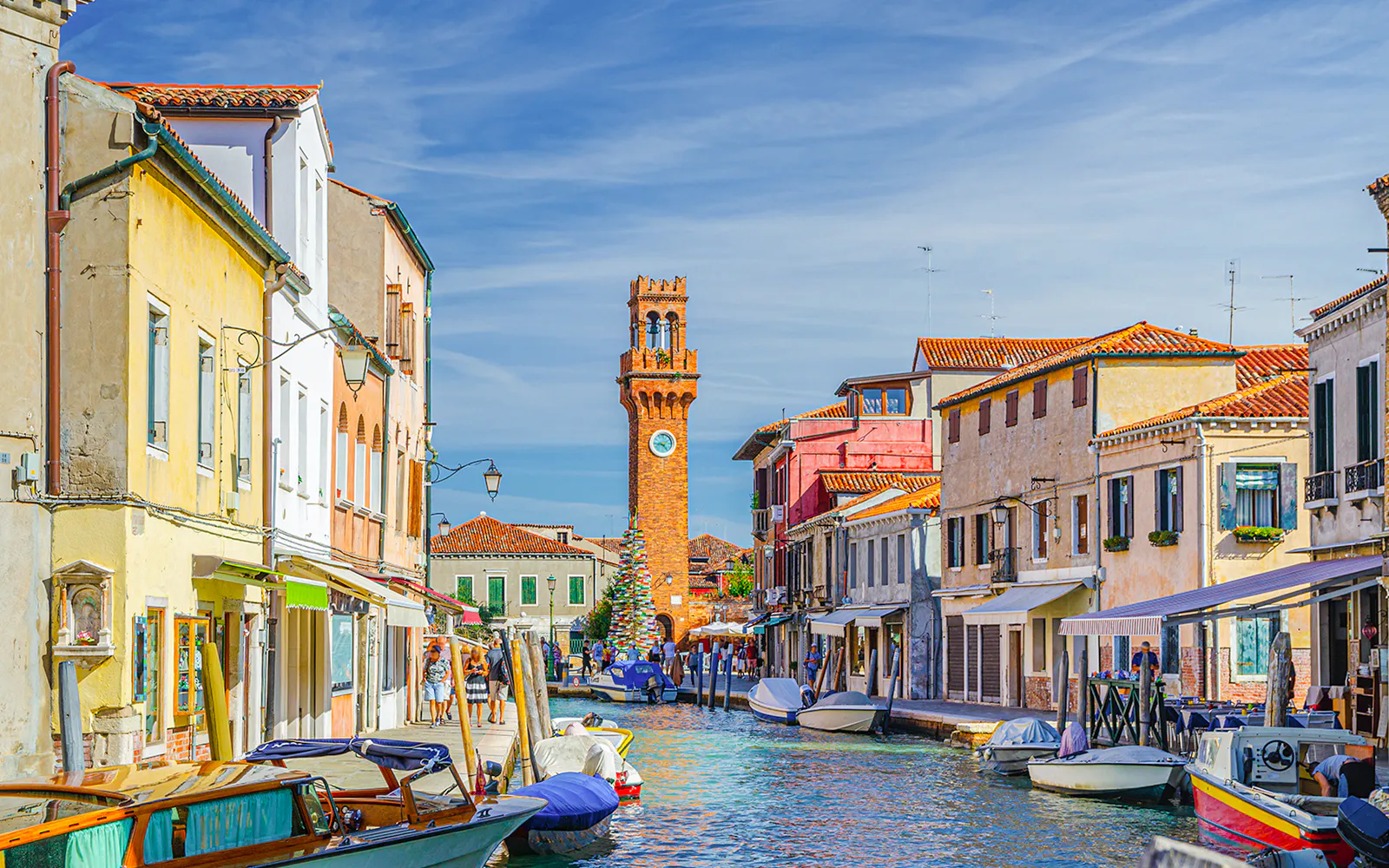
Discover Venice's famed artisan islands by private boat with live glassblowing and lacemaking demos
Reserve
Seven centuries of molten craft, preserved in flame and form.
Hand-picked by our editors — only the best 4 experiences from 12 reviewed.
Verified partners for Glass Blowing Venice tours, free cancellation where available, and instant confirmation on every booking.
5 hr
Discover Venice's famed artisan islands by private boat with live glassblowing and lacemaking demos
Reserve
5 hr 30 min
Visit two legendary lagoon islands and watch master craftsmen create blown glass and handmade lace
Reserve
4 hr
Half-day lagoon cruise visiting two iconic islands, featuring a master glassblower demonstration and free time
ReservePrices from verified partners. Availability updates in real time at checkout. Free cancellation policies apply where shown.
The landmarks, rooms, and views travelers on Glass Blowing Venice tours remember — all visible on a single visit.
The museum is housed in this 17th-century Gothic-style palace that served as a residence for Venetian bishops for centuries. It remains a historic architectural landmark in its own right.
This iconic blue wedding cup dates back to the 15th century and is a masterpiece of early Murano glassmaking. It is one of the most famous artifacts in the museum collection.
This section features rare Roman glass artifacts from the 1st to 3rd centuries. It highlights the ancient origins of local glassmaking techniques.
Representing one of the largest collections globally, these items range from Renaissance crystal to 20th-century artistic pieces. The displays illustrate the technical evolution of the craft.
Admire refined 20th-century designs by master Carlo Scarpa that redefined modern glass art. These pieces show a shift toward minimalist and experimental styles.
Every Glass Blowing Venice tour side-by-side — duration, what's included, how you redeem.
| Experience | Duration | Rating | Skip-the-line | Guide | Small group | Free cancel. | Price | |
|---|---|---|---|---|---|---|---|---|
|
Luxury / Private Most popular
Murano & Burano Private Boat Tour with Glassmaking
|
5 hr | ★ 4.7 | — | ✓ | — | ✓ | €49 | Book → |
|
Standard Entry
Murano & Burano Islands: Glass Art and Colorful Villages Tour
|
5 hr 30 min | ★ 4.5 | — | ✓ | ✓ | ✓ | €29 | Book → |
|
Guided Experience
Murano & Burano Islands Boat Excursion with Glassblowing Demo
|
4 hr | ★ 4.4 | ✓ | ✓ | ✓ | ✓ | €25 | Book → |
All prices from verified partners. Availability and exact terms confirmed at checkout.
The museum offers a structured academic perspective, whereas private workshops provide the direct, sensory immersion sought by those booking a glass blowing venice tour.
| Feature | Top pick Murano Glass Museum | Private Factory Demonstrations |
|---|---|---|
Educational Focus |
Curatorial and artistic significance | Commercial techniques and production |
Live Demonstration Availability |
None (exhibits only) | Frequent scheduled showings |
Historical Context |
Extensive archival collections | Modern industrial operations |
Price |
10 EUR | Free to 30 EUR |
Interaction Level |
Passive observation | Guided artisan engagement |
Authenticity |
Formal museum curation | Artisan marketing environments |
| See tickets → |
Verdict: Choose the museum for a deep dive into historical artifacts, or select a private factory if you prioritize securing glass blowing venice tickets for a live, up-close masterclass experience.
Choose your ticket, select your date, and reserve in under two minutes. Secure checkout handled by our verified partner.
Instant confirmation by email, with a mobile voucher you can save offline. No printing, no queuing at a collection desk.
Arrive at the entrance, show your voucher on your phone, and walk in. Most tickets include priority or skip-the-line access.
Practical details for Glass Blowing Venice tickets straight from our verified partners — hours, access, rules, and how to get there.
Fondamenta Marco Giustinian
Primary access point for glass blowing venice visitors
Open in Google MapsUse ACTV vaporetto lines 4.1 or 4.2 to reach the Museo stop directly.
Private water taxis provide door-to-door service to the museum foundation.
Casual attire is appropriate for the museum environment. Comfortable walking shoes are recommended for exploring Murano.
Large backpacks and bulky items may need to be stored upon entry. Security checks are standard for museum facilities.
Non-commercial photography is generally permitted without flash inside the galleries. Please respect artifact preservation rules.
The museum is wheelchair accessible and located in an area with vaporetto stops nearby. Facilities are designed to accommodate diverse visitor needs.
Mobile phones should be set to silent mode during your visit. Photography using mobile devices is allowed in non-restricted areas.
Families are welcome, with specific programs often available to engage younger visitors. Children under certain ages may qualify for discounted rates.
Consumption of food and drinks is prohibited inside the exhibition halls. Several cafes are located nearby along the canals.
Pets are not permitted inside the museum galleries. Service animals are exempt from this restriction.
The museum displays history spanning from Roman antiquity to contemporary works. Staff are available to provide directions within the palace layout.
Fondamenta Marco Giustinian
Primary access point for glass blowing venice visitors
Get directionsBest time to go, insider tips, nearby landmarks, and the cancellation fine print — flip through to skim what matters to you.
How crowds, weather, and events shift across the year.
Mild temperatures make the walk from the vaporetto stop pleasant. High popularity during glass festivals.
Expect larger crowds and warmer weather. Evening hours are available for a relaxed experience.
The current season offers comfortable conditions for touring Murano landmarks. Ideal for avoiding peak summer traffic.
Quieter period with shorter lines. Perfect for appreciating intricate displays in the quiet palace rooms.
Small details that turn a good visit into a great one.
Save by bundling the glass museum with other local cultural sites.
Arriving at 10:00 ensures you have ample time before the ticket office closes at 16:00.
The palace can have varying temperatures depending on the season.
The Venice Glass Week often features special activities during September.
The museum collection is arranged chronologically for a better understanding of glass evolution.
Non-bookable sights within a short walk — free to visit, easy to pair.
Famous for its 12th-century mosaic floor and Byzantine architecture.
A fine example of Venetian Gothic style with notable historic facade.
A central local square perfect for observing daily life in Murano.
The active lighthouse providing guidance to ships in the lagoon.
Flexible, no hidden fees.
All tickets are non-refundable and fixed to the selected date. Entry costs 10 EUR per person.
Hand-picked options within walking distance — pick a district for vibe, or a specific hotel for convenience.
Murano's glass furnaces have burned continuously since 1291, when Venice's Grand Council ordered all glassmakers to relocate from the city center to this northern lagoon island.
The decree was both pragmatic and protective — timber-frame Venice feared fire, and the Republic wanted to guard trade secrets that made Venetian cristallo the most transparent glass in medieval Europe. By the sixteenth century, Murano held a continental monopoly on mirrors, and glassblowers operated under threat of assassination if they disclosed techniques abroad.
The Museo del Vetro, housed in Palazzo Giustinian since 1861, chronicles this history through 4,000 artifacts spanning Roman millefiori beads to twentieth-century studio pieces by Carlo Scarpa and Ercole Barovier. The permanent collection occupies fourteen rooms across two floors, tracing the evolution of lattimo (milk glass), aventurine flecked with copper crystals, and the filigrana cane work that requires fusing dozens of colored rods into a single gather. Temporary exhibitions rotate every six months, often spotlighting contemporary artists who apprenticed in Murano's remaining thirty furnaces.
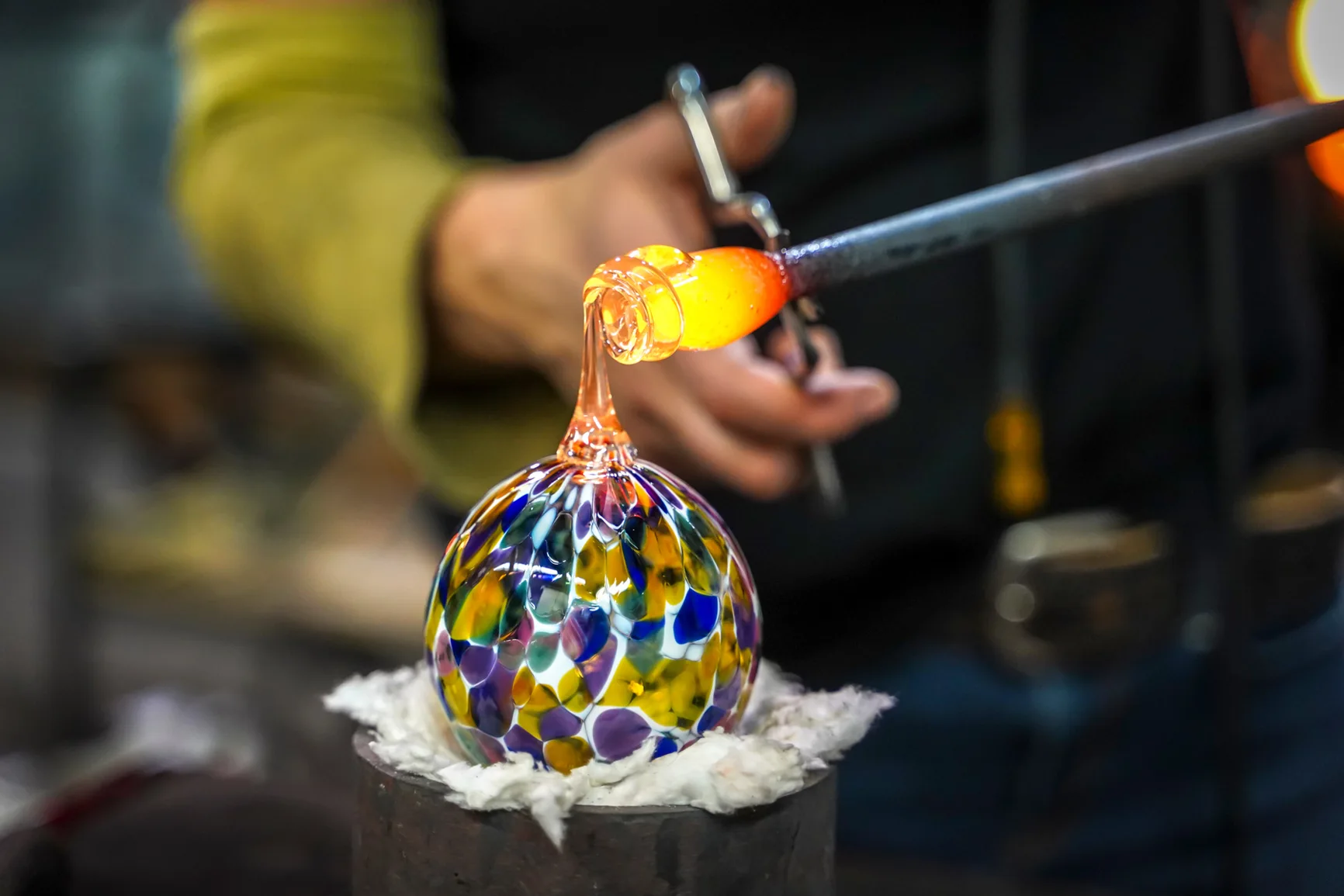
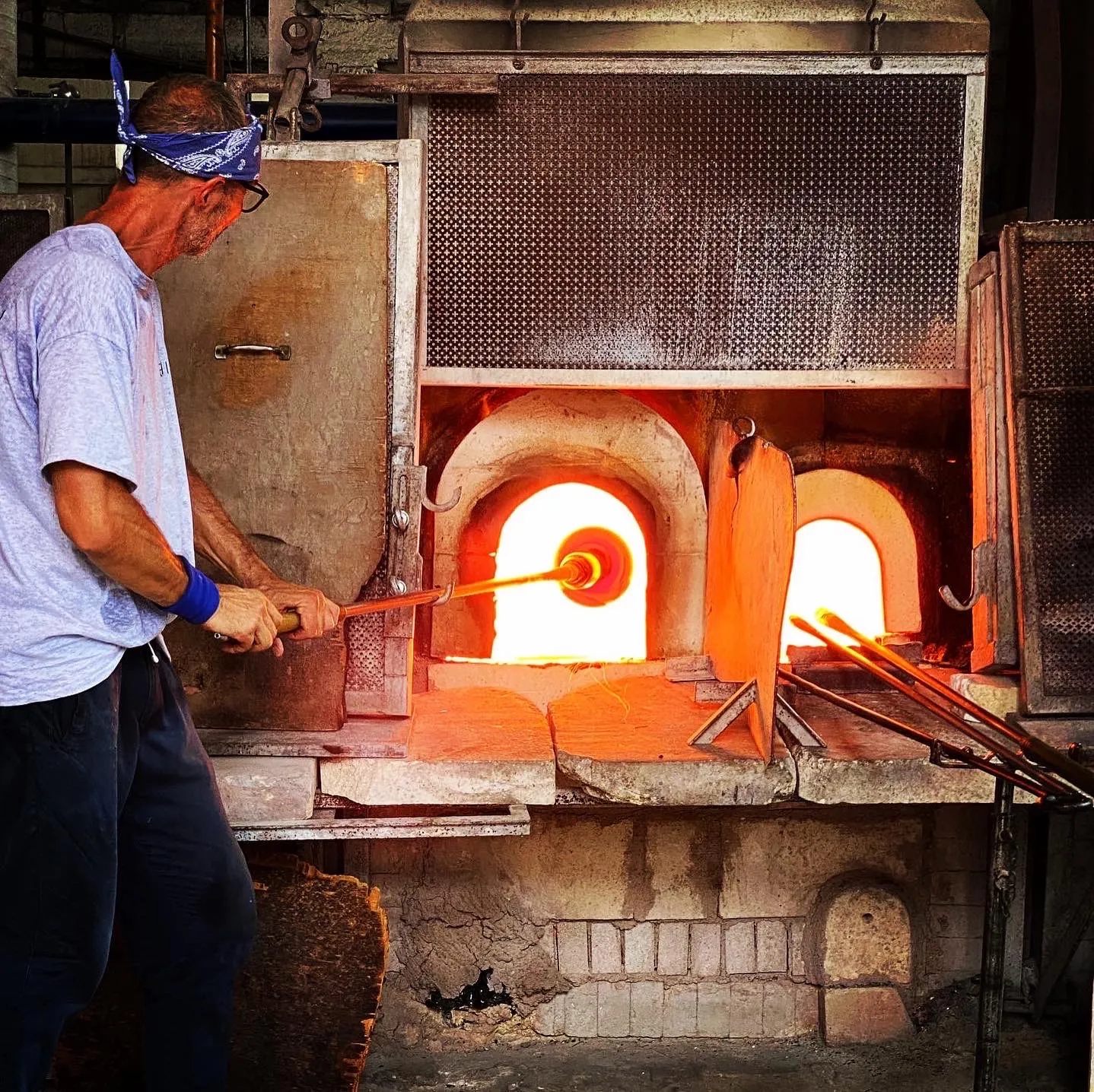
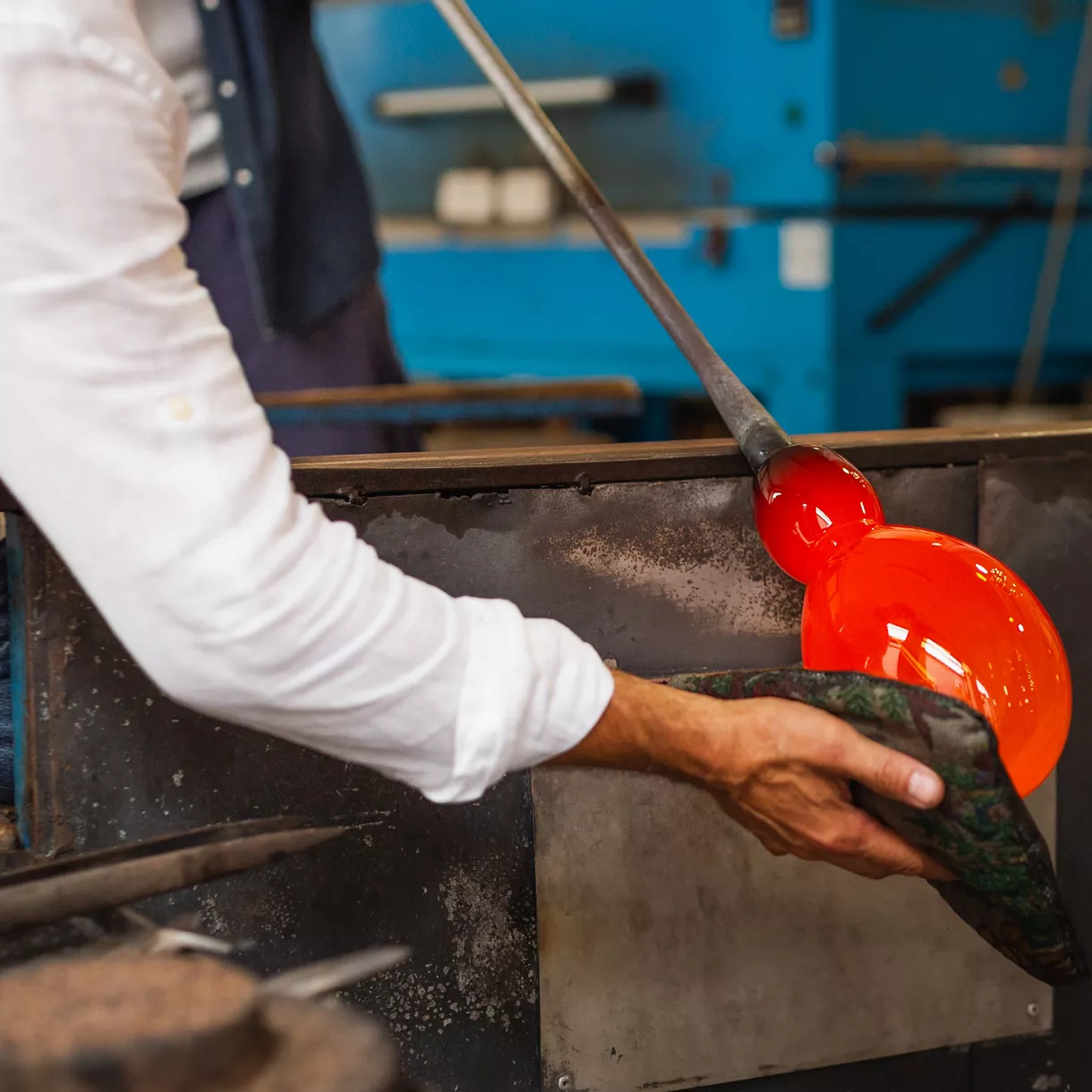
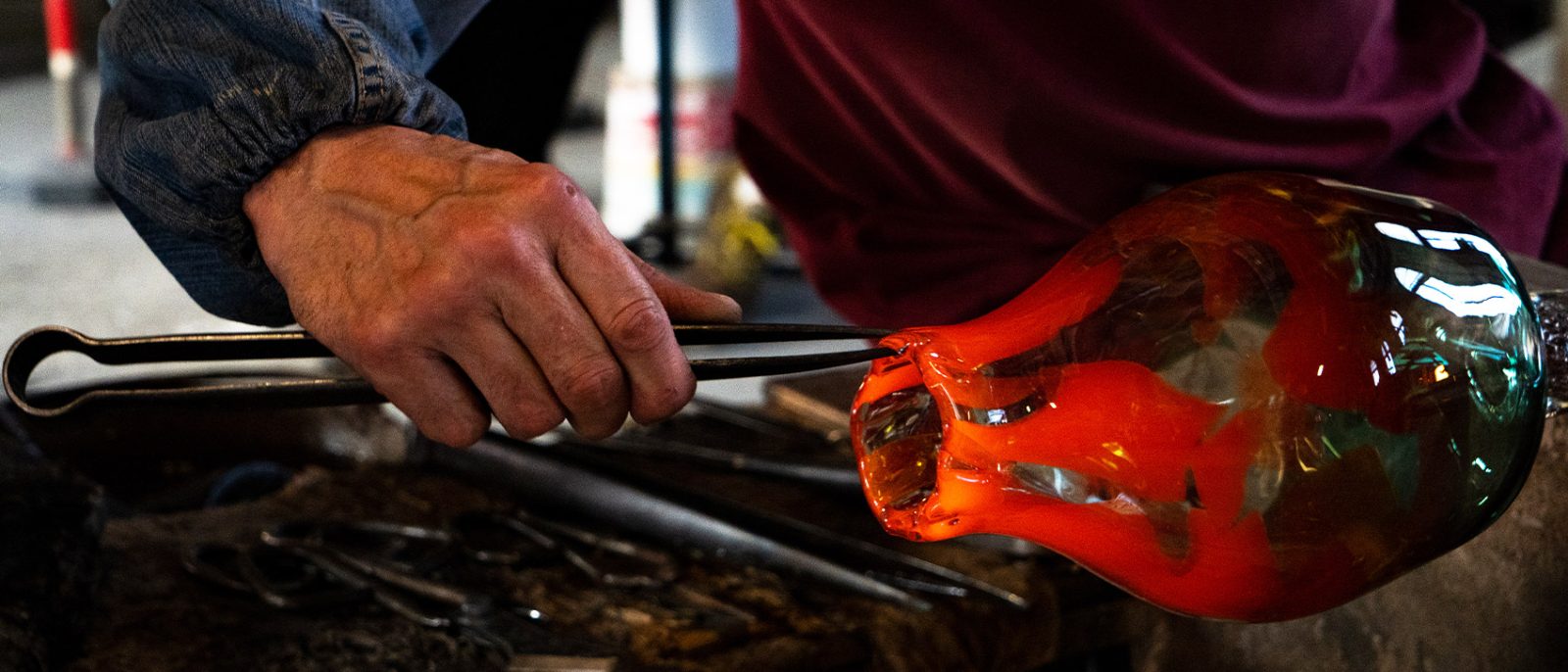
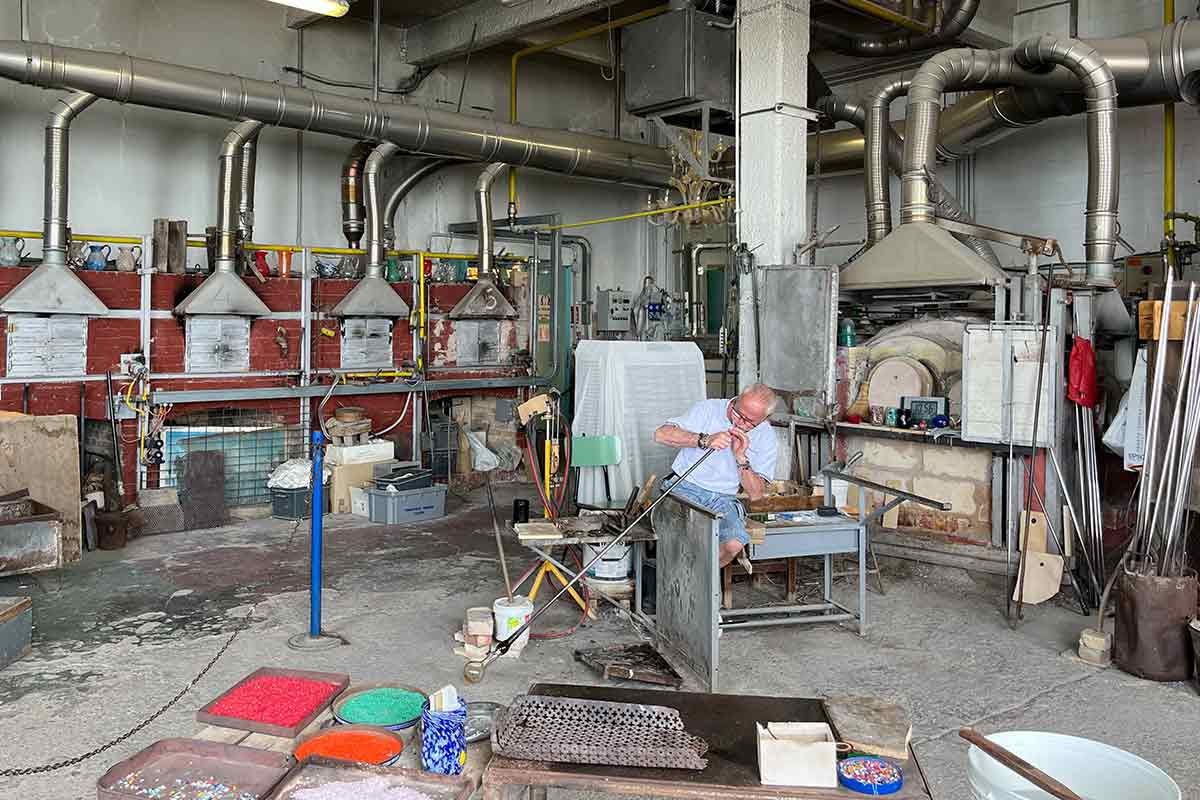
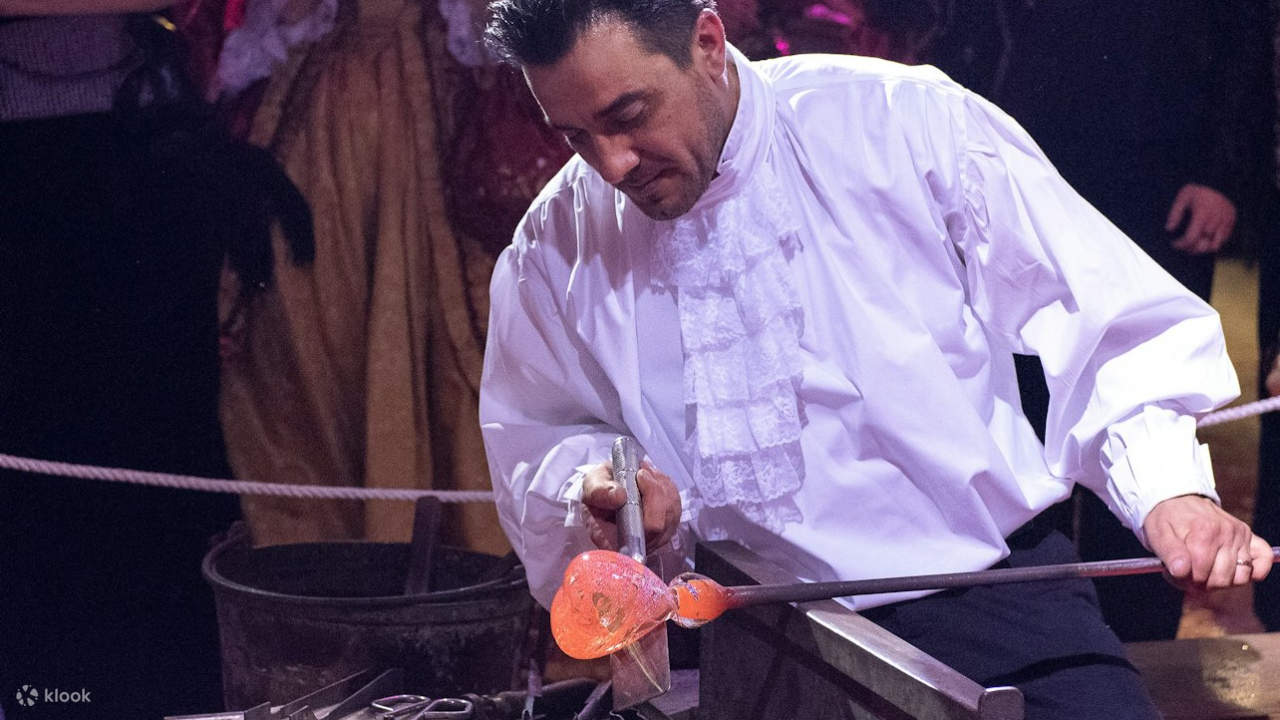
Glass blowing Venice experiences center on live demonstrations at working fornaci along Fondamenta dei Vetrai. Master craftsmen heat silica-soda-lime mixtures to 1,400°C, then shape molten gathers using wooden battledores and steel jacks — tools unchanged since the Renaissance. A single goblet requires twelve minutes of coordinated movement between the gaffer and his servente assistant. Observers stand three meters from the glory hole opening, close enough to feel radiant heat but separated by iron railings installed after 2019 safety audits.
The island's glassmaking district extends along a 1.2-kilometer waterfront dotted with showrooms, many family-operated since the 1700s. Authentic Murano glass carries a Vetro Artistico® Murano trademark, a consortium certification introduced in 1994 to combat Asian counterfeits flooding the souvenir market. Legitimate workshops display this decal beside their entrance, and artisans will explain the annealing process — a forty-eight-hour controlled cooling cycle that prevents thermal shock fractures in finished pieces.

"Murano held a continental monopoly on mirrors, and glassblowers operated under threat of assassination if they disclosed techniques abroad."
A step-by-step walkthrough of Glass Blowing Venice tickets — what you'll see, how long each stage takes, and the details that matter.
You board vaporetto line 4.1 or 4.2 at Fondamente Nove, disembarking twelve minutes later at Museo. The Glass Museum occupies a fifteenth-century palazzo sixty meters from the dock, its coral-pink facade marked by Gothic lancet windows.
You enter the ground-floor atrium, where a timeline mosaic traces glassmaking from Phoenician core-forming to Murano's 1291 founding decree.
The second-floor galleries hold Roman tear bottles, Byzantine enameled lamps, and a 1570 wedding cup with sapphire-blue threading so fine it resembles lace. You pause before the Barovier Nuptial Cup, its gold-leaf applications still luminous after five centuries. In the contemporary wing, Scarpa's 1936 Sommerso vases layer colored glass like geological strata.
You exit and walk four hundred meters east along Fondamenta dei Vetrai to a working furnace. A maestro retrieves a glowing gather from the furnace mouth, rolling it across a marver table to achieve cylindrical symmetry. He inflates the gather with controlled breaths through a blowpipe, then reheats and shapes it with wet fruitwood paddles. Within eleven minutes, a carafe emerges. The piece enters an annealing oven set to 482°C, beginning its two-day cooldown. You leave with an understanding that every Murano object represents not minutes, but centuries of inherited precision.
The museum is open daily from 10:00–17:00. Please ensure you arrive before the ticket office closes at 16:00.
Yes, the museum is fully wheelchair accessible for all visitors.
Bulky bags must be stored; small personal items are generally allowed.
Non-commercial photography without flash is permitted.
We recommend arriving between 10:00–16:00 to ensure a smoother, quieter experience.
There is no formal dress code, though comfortable walking shoes are highly recommended.
Food and drink are not permitted inside the museum galleries.
You can reach the museum by taking the ACTV vaporetto line 4.1 or 4.2 to the Museo stop.
Children are welcome, and those under 5 often receive free entry with an adult ticket.
Tickets for glass blowing venice museum visits are typically non-refundable.
Yes, you can often purchase a combined ticket that includes other local museum access.