
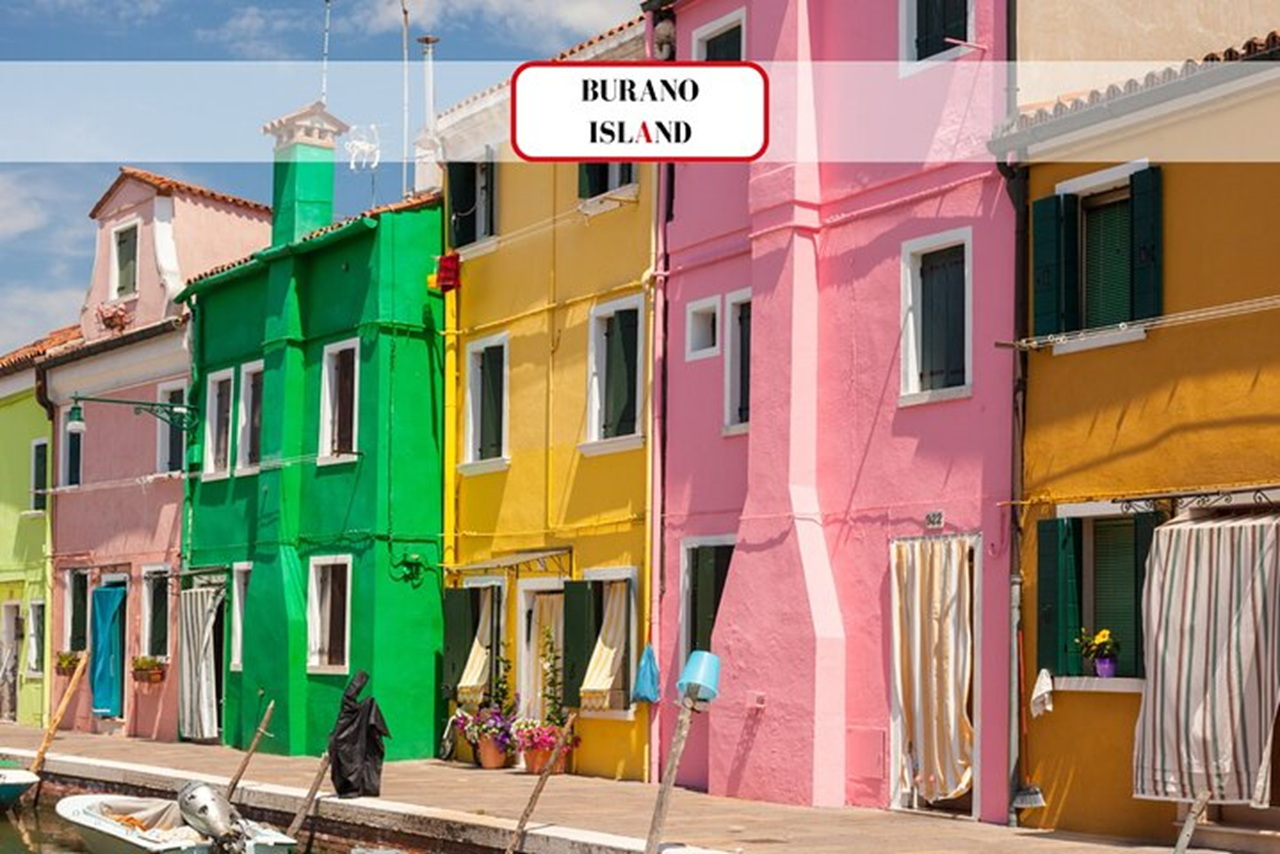
5 hr 30 min
Murano Glassblowing & Burano Island Colors Tour
Explore two iconic Venetian lagoon islands with guided demonstrations of glassmaking and lace crafts
Reserve
Hand-picked by our editors — only the best 5 experiences from 28 reviewed
Verified partners for every tour, free cancellation where available, and instant confirmation on every booking.
5 hr 30 min
Explore two iconic Venetian lagoon islands with guided demonstrations of glassmaking and lace crafts
Reserve
5 hr
Journey to Venice's artisan islands by private boat and witness centuries-old glassblowing and lacemaking
Reserve
6 hr
Six-hour lagoon voyage visiting three iconic Venetian islands with glassblowing showcase and free exploration time
ReservePrices from verified partners. Availability updates in real time at checkout. Free cancellation policies apply where shown.
The landmarks, rooms, and views travelers on this tour remember — all visible on a single visit.
Witness master artisans shape molten glass at 1,000 degrees Celsius during the glass blowing venice tour.
Learn the specific techniques used for centuries in Murano factory tours.
View historical and modern glass masterpieces created by local experts.
Observe the precise finishing process used on finished art pieces.
Explore the historical iron instruments used in traditional glass blowing venice tour work.
They complement each other; most visitors who do both call the active glass blowing venice tour the more thrilling encounter, while the museum offers superior context. These glass blowing venice tour tours allow observers to witness the master craftsmanship of a Venetian furnace firsthand.
| Feature | Top pick Glass Blowing Factory | Museo del Vetro |
|---|---|---|
Experience Type |
Live furnace demonstration | Historical artifact exhibition |
Engagement Level |
Active and immersive | Passive and observational |
Focus |
Contemporary artisan techniques | Historical evolution of silica designs |
Ideal Visitor |
Action seekers and families | History enthusiasts and scholars |
Primary Benefit |
Witnessing molten glass shaping | Viewing centuries of Murano heritage |
| See tickets → |
Verdict: Choose the glass blowing venice tour tickets for a dynamic look at the manufacturing process, or visit the museum to deepen your knowledge of local vitreous artistry.
Choose your ticket, select your date, and reserve in under two minutes. Secure checkout handled by our verified partner.
Instant confirmation by email, with a mobile voucher you can save offline. No printing, no queuing at a collection desk.
Arrive at the entrance, show your voucher on your phone, and walk in. Most tickets include priority or skip-the-line access.
Practical details for your visit straight from our verified partners — hours, access, rules, and how to get there.
Fondamenta dei Vetrai
Main vaporetto stop for the glass blowing venice tour
Use ACTV Vaporetto line 4.1 or 4.2 to Murano Colonna.
Casual attire is appropriate for a glass blowing venice tour. Due to the high temperatures near furnaces, breathable fabrics are recommended.
Small personal bags are permitted during the glass blowing venice tour. Large suitcases or backpacks must be left at your accommodation as there is no storage on-site.
Photography is permitted in the showroom during your glass blowing venice tour. Please refrain from using flash inside the furnace room to avoid distracting the artisans.
The glass blowing venice tour is accessible for visitors using wheelchairs. Level access is provided to the main furnace demonstration area and gallery space.
Mobile phones are allowed but must be set to silent during the artisan demonstration. Recording short videos of the glass blowing venice tour process is permitted.
Families are welcome on every glass blowing venice tour. Children must be accompanied by an adult at all times, especially near hot glass equipment.
Eating and drinking are not permitted inside the glass blowing venice tour workshop area. Water may be consumed in designated lobby zones.
Only certified service animals are permitted inside the glass blowing venice tour facility. Pets are not allowed in the furnace areas.
The 5 EUR entrance fee is collected at the entrance. Booking private workshops offers an exclusive experience beyond the standard glass blowing venice tour tickets.
Fondamenta dei Vetrai
Main vaporetto stop for the glass blowing venice tour
Get directionsBest time to go, insider tips, nearby landmarks, and the cancellation fine print — flip through to skim what matters to you.
How crowds, weather, and events shift across the year.
September to November offers cooler temperatures for the ferry ride. Crowds are thinner than in peak summer months.
March to May provides pleasant weather for island walking. Ideal for those booking advanced glass blowing venice tour spots.
June to August is very busy. Arrive at 09:30 to avoid peak afternoon groups.
Small details that turn a good visit into a great one.
Visit before 12:00 to see more artisanal work without crowds.
Non-bookable sights within a short walk — free to visit, easy to pair.
Famous for 12th-century mosaic floor and Byzantine architecture.
Dedicated to the history of local glass production.
A quiet plaza reflecting traditional island architecture.
Flexible, no hidden fees.
Full refunds are available for cancellations made at least 24 hours prior to the scheduled glass blowing venice tour. The 5 EUR entrance fee per person is non-refundable if the service is already rendered.
Hand-picked options within walking distance — pick a district for vibe, or a specific hotel for convenience.
Upscale hotel located in a former glass furnace.
Comfortable guesthouse near the glass blowing venice tour.
Murano's furnaces have burned without interruption since 1291, when Venice's Great Council exiled all glassmakers to the island to prevent fires from consuming the wooden city. The decree transformed a safety measure into monopoly: for five centuries, Murano held Europe's only knowledge of cristallo, a soda-lime formula so clear it rivaled rock crystal. Artisans who fled faced assassination. Those who stayed became nobility, their daughters permitted to marry into patrician families despite guild-class origins. The glass blowing Venice tour tradition connects directly to those medieval workshops. Twenty-three active fornaci still operate on Murano today, their methods largely unchanged from Renaissance techniques documented in Antonio Neri's 1612 treatise L'Arte Vetraria. A maestro gathers molten silica on a hollow cane, inflates the gather with precise lung pressure, and shapes it with wooden paddles soaked in water to prevent charring. The entire sequence—from gathering to annealing—must occur within eight minutes before the glass drops below working temperature. Timing separates apprentices, who train for fifteen years, from masters. Contemporary Murano production balances heritage with commercial survival. After twentieth-century competition from Bohemian and Asian manufacturers eroded market share, the Consorzio Promovetro introduced the Vetro Artistico Murano trademark in 1994, certifying that each piece originates from island furnaces using traditional methods. Factories like Seguso and Barovier & Toso now operate as living museums, offering demonstrations that decode techniques: the sommerso layering that traps color between clear glass shells, the zanfirico rods twisted into spiral canes, the avventurina formula containing copper crystals that sparkle like night water. Most glass blowing Venice tour experiences include boat transfers from Venice proper, since Murano sits 1.5 kilometers across the lagoon. Combined itineraries often add Burano's lace workshops and Torcello's seventh-century basilica, creating a full-day circuit of craft islands. Factory visits typically begin with furnace demonstrations—temperatures reach 1,400 degrees Celsius—followed by showroom access where finished works range from five-euro trinkets to five-figure chandeliers. The €5 demonstration fee supports working artisans, a model that keeps Murano's furnaces lit in an era when cheaper alternatives flood global markets.
"Artisans who fled Murano faced assassination; those who stayed became nobility."
A step-by-step walkthrough of the visit — what you'll see, how long each stage takes, and the details that matter.
You board a vaporetto at Fondamente Nove, the northern waterfront where morning light cuts across the lagoon in copper bands. The boat curves past San Michele's cypress-lined cemetery island before docking at Murano Colonna, where factory chimneys rise above low-slung workshops. Your guide leads you into a fornace where heat from the furnace opening presses against your face like opened oven doors. The maestro works in silence, gathering a slug of orange molten glass onto his blowing iron. He inflates it with three short breaths, rotates the pipe against a steel rail to maintain symmetry, and paddles the bubble into a vase form in under ninety seconds. When he snaps the finished piece free with iron shears, an assistant carries it on a wooden fork to the annealing oven, where it will cool for twelve hours. You watch three more pieces take shape—a goblet, a bird, a bowl—each completed faster than you can photograph the sequence. Afterward you walk the showroom floor, surrounded by backlit shelves holding everything from millifiori paperweights to life-sized glass horses. Your guide explains the sommerso technique in a vase where cobalt blue sits suspended inside clear crystal. If your tour continues to Burano, the boat departs at 11:30, giving you time to photograph the Murano lighthouse and sample bussolà biscuits from a canal-side bakery before the next crossing.
The facility is open daily from 09:30–16:30 for your glass blowing venice tour.
Entrance fee is 5 EUR per person at the factory gate for standard glass blowing venice tour demonstrations.
Yes, the glass blowing venice tour venue is fully accessible to wheelchair users.
Photos are allowed during your glass blowing venice tour, but please avoid flash near the furnaces.
Arriving at 09:30 ensures the best glass blowing venice tour experience with fewer crowds.
Children are welcome on every glass blowing venice tour, provided they are supervised.
Casual clothing is fine for the glass blowing venice tour, but wear comfortable footwear.
Food is not permitted inside, keeping the glass blowing venice tour area clean and safe.
Take Vaporetto line 4.1 or 4.2 to Murano Colonna for your glass blowing venice tour.